Photography: Con Poulos Styling: Olivia Blackmore

Ingredients
Method
PASTA DOUGH Process flour, eggs and parsley in a food processor until a dough starts to form. Tip onto a work surface; knead dough for 3 minutes or until smooth. Wrap dough in plastic wrap; set aside to rest for 30 minutes. (Makes 650g.)
CHEESE FILLING Meanwhile, process the goat’s cheese, ricotta, Parmigiano Reggiano PDO, lemon rind and egg yolks until smooth; transfer to a medium bowl. Stir in chilli and oregano; season to taste. Refrigerate until ready to use. (Makes 3 1/3 cups/800g.)
Divide Pasta Dough into four even pieces. Working with one piece at a time, and keeping the remaining dough covered, flatten then lightly roll out the dough until thin enough to fit through the widest setting on the pasta machine, dusting with extra flour if sticky. Roll the dough through the widest setting. Fold the dough into thirds then turn 90 degrees. Roll again through the widest setting. Repeat twice more or until dough pieces are smooth and even.
Continue rolling dough through the pasta machine, reducing the setting by a notch each time, until each piece is 2-3mm thick. Dust sheets with semolina.
Working with one sheet at a time, and a long side in front of you, spoon 1 tablespoon of the Filling onto the dough, about 1.5cm up from the edge and approximately 5cm apart along the length of the sheet. Lightly brush a little water around each mound of filling. Fold the top half of the pasta sheet over the filling mounds, pressing firmly around each mound to seal completely, making sure to remove any air pockets.
Using a pastry wheel, knife or ravioli stamp, cut between the filling mounds to form ravioli (or, you can cut ravioli into squares or circles). Place ravioli on a tray dusted with semolina. Repeat with remaining pasta and filling.
When ready to serve, cook ravioli, in batches, in a large saucepan of boiling salted water for 2 minutes or until al dente. Drain, reserving ½ cup (125ml) pasta water.
Return ravioli to the pan with the oil and ¼ cup (60ml) of the reserved pasta water; toss for 2 minutes or until pasta is well coated and sauce begins to thicken, adding more pasta water if needed. Season to taste.
Serve ravioli and sauce topped with lemon rind curls, freshly ground pepperand extra Parmigiano Reggiano PDO.
Can this ravioli be frozen?
To freeze uncooked ravioli, place in a single layer on lined trays. Freeze for 2 hours or until solid. Transfer to a freezer-proof airtight container, each layer interleaved with baking paper to prevent sticking. Freeze for up to 3 months.
Did you know?
It’s a common assumption that parmesan and Parmigiano Reggiano PDO are one and the same but they’re not. Parmigiano Reggiano PDO is a distinct Italian cheese, protected under a Protected Designation of Origin (PDO) status. This means it can only be called Parmigiano Reggiano PDO if it’s made according to strict regulations governing every stage of production, from the diet of the dairy cows through to the specific methods used in ageing and finishing the cheese.
Geography is also part of what makes it unique. Authentic Parmigiano Reggiano PDO can only be produced in five designated Italian provinces: Parma, Reggio Emilia, Modena, parts of Mantova and Bologna. Because of this protected status, genuine wheels are stencilled with official marks of origin on the rind, which is the easiest way to verify authenticity when you’re shopping.
Beyond its heritage and flavour, Parmigiano Reggiano PDO also has a lot to offer nutritionally. It’s a good source of protein, calcium and phosphorous, and because it undergoes a minimum ageing period of 12 months, it’s naturally lactose free which is great for those who are lactose intolerant.
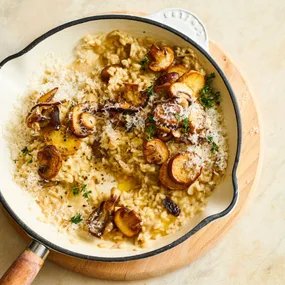
Mushroom & Parmigiano Reggiano risotto
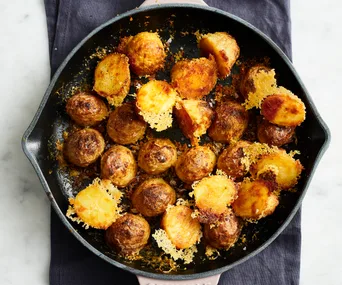
Crispy roasted potatoes with Parmigiano Reggiano
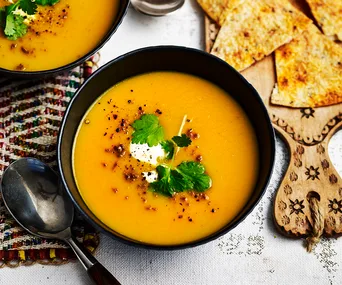
Spiced carrot soup with Parmigiano Reggiano crisps
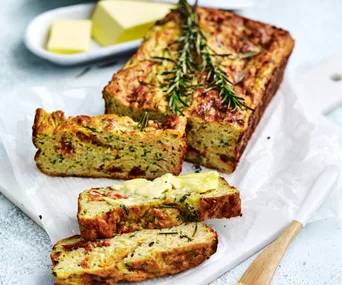
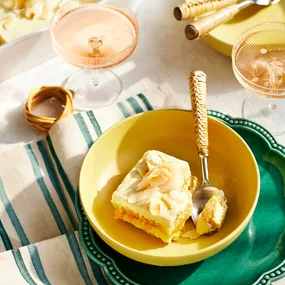
Sweet potato and zucchini loaf
The sponsorship of this recipe is funded by the European Union. Views and opinions expressed are, however, those of the author(s) only and do not necessarily reflect those of the European Union or of the granting authority. Neither the European Union nor the granting authority can be held responsible for them.


Parmigiano Reggiano PDO is a hard, grainy cow-milk cheese made in five provinces of Italy: Parma, Reggio Emilia, Modena, Mantova to the right of the Po River, and Bologna to the left of the Reno River. This cheese is salted in brine, then aged for a minimum of 12 months, with many wheels matured for 24, 36, or even 48 months or more, to develop a deeper, nuttier flavour and a firmer, more granular texture. This additive-free process celebrates a unique artisanal approach that is protected by EU PDO (Protected Designation of Origin) status.
You can spot authentic Parmigiano Reggiano PDO by its rind: genuine wheels are stamped all over with tiny dotted lettering that repeats “Parmigiano Reggiano,” along with the dairy’s registration number and the month and year of production.

Related stories
Native ad body.
Native ad body.
Native ad body.