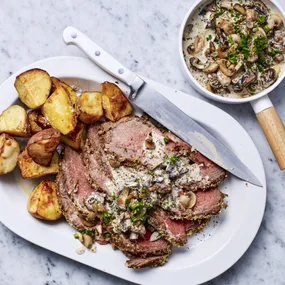
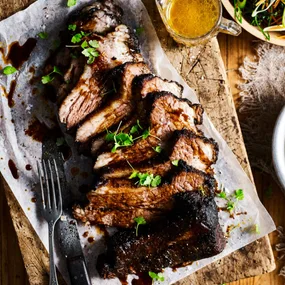
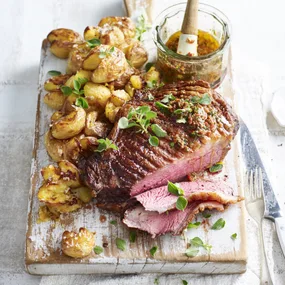
It’s no secret that Aussies love succulent roast beef, and for good reason. This recipe is great for a Sunday roast but also suitable for any day of the week, and roast beef makes the perfect meal for leftovers the next day. For Test Kitchen tips for success, see the notes below recipe.
Looking for more roasting tips or all of our family roast recipes?
Ingredients
You’ll need these …
Start cooking with these equipment essentials.


Method
Preheat oven to 200°C. Weigh beef and calculate cooking time – allow 15-20 minutes per 500g for rare. Brush oil over.
Heat a large frying pan or grill pan on medium. Sear beef 2-3 minutes on all sides, until evenly browned.
Transfer to a rack in a baking dish. Season to taste and add flavourings of choice (see here for inspiration).
Add water to dish to create steam and to prevent pan juices from burning. Roast 50-60 minutes, until cooked to taste. Rest covered in foil 10-20 minutes, for juices to settle. Slice across the grain to serve.
To test when a roast is done, use tongs to gently squeeze. Rare is very soft, medium-rare is soft, medium is soft but springy, medium-well is firm and well-done is very firm.
Test Kitchen tip
What to serve with roast beef
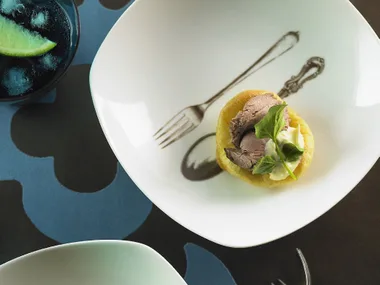
For all the trimmings serve with roasted vegetables, Yorkshire puddings, gravy and beans.
Roast beef recipe tips
When it comes to family dinners, not many dishes can measure up to a good roast beef. They’re easy to cook when you know how. They’re hearty, filling, and a crowd-pleaser. They can be really budget-friendly depending on the cut of meat you choose. And most importantly, they allow you to eat as many potatoes as you can under the guise of ‘family time’!
Invest in the perfect dish
Buy a heavy, flameproof baking dish, as it will give the best colour and flavour to the pan juices – important for a good gravy. Flameproof means it can go on the stovetop and under the grill as well as in the oven.
Seal it before you roast it
Brown small or lean roasts all over in a little oil before roasting. As they are in the oven for a short time, it will help the colour and, therefore, the flavour, and seal in the juices.
Use a thermometer
To take the guesswork out of cooking times, use a meat thermometer. Remove the roast from the oven and insert a thermometer into the thickest part. The internal temperature should reach:
Beef and lamb: rare 60°C; medium 65°C to 70°C; well-done 75°C.
Small roast? Turn up the heat.
Smaller cuts of meat with less fat should be cooked at a higher temperature. Larger cuts of meat can be cooked at a lower temperature for longer.
Cuts of meat for roasting
Eye fillet/tenderloin; rib eye/scotch fillet roast; standing rib roast; rump roast; sirloin roast; topside roast; short ribs/spare ribs.